

What Unused Spaces at Home Can I List on PeerVault to Earn Money?
TL;DR
- What you can list : Almost any dry, safe, accessible space you don’t use. The most common are a spare room, a garage, a parking spot, a basement or store room, a terrace corner, a vacant shop or godown, and a warehouse.
- Who rents : People moving or renovating, students, NRIs, small business owners and online sellers, and vehicle owners who need safe monthly parking.
- What you can earn : It depends on location, size, access, security and condition. Sample PeerVault listings include parking at ₹2,400 to ₹5,500 per month and warehouses at ₹30,000 to ₹60,000. Treat these as examples, not guarantees.
- Before you list : Confirm you have the right to rent the space (landlord or society permission), check it is dry and safe, decide what can’t be stored, set access hours, and ask a chartered accountant about tax.
- How it works : Sign up and verify, add your space with photos and price, answer enquiries through the platform, then confirm the booking and payment.
- To get booked faster: Use clear photos, exact measurements, a specific description, quick replies, and transparent rules.
- Common mistakes : Overpricing, vague listings, ignoring damp or pests, skipping storage rules, and not checking permission.
- Best way to start : List one easy space first, such as a parking slot, garage or detached store room, then expand.
Almost any dry, safe, accessible space you don’t use can be listed. The most common ones are a spare room, a garage, a covered or open parking spot, a basement, a loft or store room, a terrace corner, and a vacant shop or warehouse. If someone in your city needs somewhere to keep furniture, a vehicle, or business stock, your unused space can earn you a monthly income through PeerVault.
Most Indian homes have at least one space that just collects dust. It might be the room where old suitcases live, the garage that stopped fitting the car years ago, or the parking slot you rarely use. At the same time, people in every city are looking for affordable storage because they’re shifting, renovating, travelling, or running a small business from a tiny flat.
PeerVault is a peer-to-peer storage platform that connects the two groups. Hosts list their space, renters search and book it, and the platform handles messaging, verification and payments. This guide walks through the types of space you can list, what makes each one rentable, what to think about before you list, and how the process works.
Why are people renting storage from individuals in the first place?
Traditional self-storage facilities are concentrated in a few metros and are often priced for commercial use. Elsewhere, people either pay for space they don’t need or squeeze belongings into their homes.
A neighbourhood host offers something different. The space is usually closer, the size is often more flexible, and the price can be lower because a home’s spare corner costs the owner nothing extra to keep. For the host, it’s income from something that would otherwise sit empty.
That match between spare space and real need is what makes this work. It’s also why demand shows up across very different cities. The listings on PeerVault right now include everything from a self-storage room in Hyderabad to a large warehouse in Hubballi and a parking spot in Chennai.
Which unused spaces at home can I list on PeerVault?
Here are the space types that work well, and what renters usually want from each.
1. A spare room
A room used only for old furniture, boxes or occasional guests is one of the most rentable spaces you can have. Renters often look for a room to hold household goods for a few months during a move, a transfer, or a home renovation.
What helps a spare room get booked :
- A lockable door, or a separate entrance if possible
- Dry walls and no seepage
- Easy access without walking through your living area
- Clear information about size and any restrictions on what can be stored
If the room is inside your home, think carefully about privacy and access hours. Many hosts set specific windows for drop-off and pickup so it doesn’t disrupt daily life.
2. A garage
Garages are a natural fit. They already have a shutter, a lock, and ground-level access, which matters when someone is carrying heavy items. A garage can serve two kinds of renters: people who want to keep a vehicle safe and people who want storage for goods.
If your garage still holds your own car, you may only be able to offer part of it. Listing a section, such as the back third, is still useful to renters who need less space.
3. A parking spot
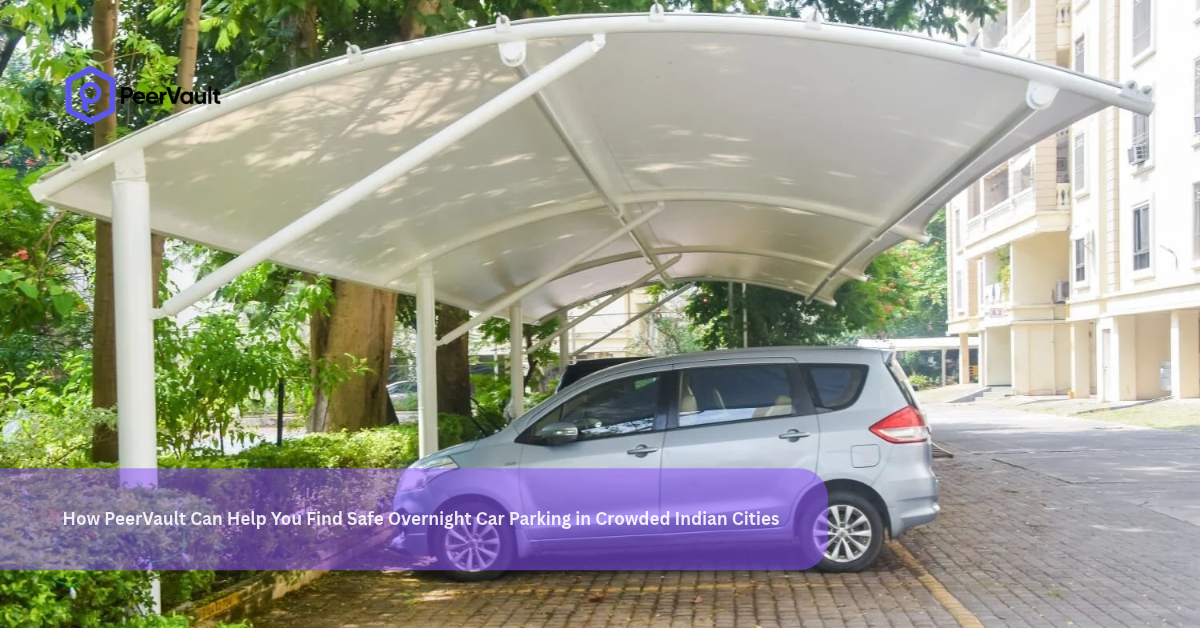
You don’t need a large area to earn something. A covered or open parking slot near a metro line, an office district, a railway station or an airport can be valuable, because people struggle to find safe monthly parking in dense areas.
Looking at current PeerVault listings gives a sense of the range. A 12′ x 20′ spot in Bengaluru is listed at ₹2,400 per month, an 18′ x 8′ spot in Chennai at ₹3,500, and a 10′ x 15′ spot in Pune at ₹5,500. Prices depend on location, size, cover and security, and they change, so treat these as samples rather than promises.
One note for apartment residents: if your parking slot sits inside a housing society, check your society’s bylaws and any agreement you have with the association before listing it. Some societies restrict outsiders’ vehicles, and it’s better to know that up front.
4. A basement, loft or store room
Areas that feel too awkward for daily use can still hold boxes, seasonal items, or archived business files. Renters storing low-volume items don’t need much space, only somewhere clean and dry.
The main concern is moisture. If a basement gets damp in monsoon, be honest about it in your listing, or fix it before renting. A renter storing electronics or books will care a lot about that detail.
5. A terrace or open area
An open terrace can work for certain items, such as bicycles, gym equipment, or weather-tolerant goods, particularly if you have a covered section. It’s a smaller category, but it’s worth considering if you have a large, secure, easy-to-reach area and nothing else to offer.
6. A vacant shop or godown
If you own a shop that’s between tenants, or a small godown behind your house or business, you can list it for short-term storage. Small businesses, online sellers and traders often look for flexible commercial space without signing a long lease.
7. A warehouse or larger commercial space
PeerVault also lists warehouses. Recent examples include a 50′ x 62′ warehouse in Hubballi at ₹37,200 per month, a 52′ x 28′ warehouse in Jaipur at ₹60,000, and a 56′ x 19′ x 12′ warehouse in Gurugram at ₹30,000. These are commercial spaces rather than typical home spaces, but if you own an idle industrial or commercial property, the same platform can reach renters looking for exactly that.
How much can I realistically earn?
The honest answer is that it depends on where you live, how big the space is, how easy it is to reach, and how secure it feels. A few things move the number more than anything else :
- Location: Spaces near dense residential areas, offices, transport hubs, and commercial zones get more enquiries.
- Size and shape: Usable, regular floor space is easier to rent than awkward corners.
- Access: Ground floor and vehicle access can matter as much as square footage.
- Security: A shutter, a lock, lighting and CCTV all improve trust.
- Condition: Clean, dry and well-lit spaces book more often.
A useful way to price your space is to browse existing listings in your city and compare size, features and rent. Start slightly competitively, then adjust once you see how much interest you get. A listing that’s priced fairly and booked steadily usually earns more over a year than one that sits vacant at a higher price.
Also keep in mind that early listings may take time to get their first booking. Treat it as gradual income rather than a quick payout.
What Should You Verify Before Listing Your Space on PeerVault?
A little preparation saves problems later. Here’s a practical checklist.
Ownership and permission. Verify that you are authorized to rent the space. Examine your rental agreement if you are a tenant. If the space is part of a housing society, check the rules.
Safety and suitability. Confirm the space is dry, structurally sound and free from pests. Think about electrical wiring, ventilation and fire safety, especially if renters may store bulky goods.
What you’ll allow. Decide in advance what can and can’t be stored. Most hosts prohibit flammable materials, perishable food, illegal items, hazardous chemicals, and anything that could attract pests. State these rules clearly in your listing.
Access rules. Decide when renters can come and go. Set reasonable hours, and explain how pickup and drop-off will work.
Tax and legal points. Rental income can have tax implications in India, and the treatment can depend on the kind of property, how much you earn, and whether the income is treated as property income or business income. For commercial spaces, GST may also come into play above certain thresholds. Speak to a chartered accountant to understand what applies to you. This article is general information and not tax advice.
How does listing on PeerVault work?
The process is designed to be simple.
1. Create an account. Sign up on PeerVault and complete the basic verification steps.
2. Add your space. Enter the space type (self storage, warehouse or car parking), the location, dimensions, monthly price, and features. Upload clear photos.
3. Describe it honestly. Mention access, security, restrictions, and anything a renter would want to know before visiting.
4. Get enquiries. Interested renters message you through the platform, so you don’t need to share your personal number too early.
5. Confirm a booking. Once you’re both happy, the renter books and pays through the platform’s payment system.
You can start from the Add your space page, and the FAQs and Help Center cover common questions.
How can I expedite the booking of my listing?
Small details make a real difference to whether someone chooses your space over another.
Take good photos. Natural light, a tidy space, and pictures from several angles show renters what to expect. Avoid photos with clutter or your own belongings scattered around.
Include exact measurements. Renters need to know if their sofa, bike or boxes will fit. Give length, width and height where relevant.
Write a plain, specific description. “Dry ground-floor room, 10′ x 12′, separate entrance, near the metro station” is more useful than a paragraph of general claims.
Respond quickly. Renters often message several hosts at once. Replying within a few hours makes a big difference.
Be transparent about rules. Clear rules reduce disagreements later and help renters trust you.
Mention nearby landmarks. Metro stations, main roads, colleges and business districts help renters judge convenience quickly.
Is it safe to rent my space to someone I don’t know?
This is the question hosts ask most, and it’s a fair one. A few things help reduce risk.
PeerVault describes its platform as having verified users and secure communication tools, so you can talk to a renter without giving out personal contact details straight away. The platform also mentions insurance options for stored belongings, which is worth reading about in the help section so you understand what is covered and what isn’t.
Beyond what the platform provides, common-sense steps still matter :
- Talk to the renter first and ask what they plan to store.
- Confirm in writing what’s allowed and what isn’t.
- Take dated photos of the space before the renter moves in.
- Keep records of the booking and any conversations.
Most rental relationships are uneventful. The goal of these steps is simply to make sure both sides know what to expect.
What kinds of renters will I meet?
Understanding who’s looking helps you shape your listing.
- People moving homes or cities who need somewhere to keep belongings between houses
- Families renovating who need to clear a room for a few months
- Students and young professionals with luggage or furniture between hostels and flats
- NRIs and people working abroad who want to keep belongings safely in India
- Small business owners and online sellers who need inventory space
- Vehicle owners who need safe monthly parking or storage while travelling
Different renters want different things. A student wants low price and easy access. A business wants reliable hours and space for bulk. Deciding who your space suits best will help you write a stronger listing.
Common mistakes new hosts make
Overpricing at the start. A high price with no bookings earns nothing. Begin near comparable listings and adjust.
Vague listings. If a renter can’t tell the size, condition, or rules, they’ll move on to a clearer listing.
Ignoring moisture and pests. One bad experience with damp or insects damages your reputation quickly.
Skipping the rules. Not stating what can’t be stored leads to awkward conversations after the booking.
Forgetting permission. Renting a space you don’t have the right to rent can cause problems with landlords or societies.
Is renting out my space worth the effort?
For many people, yes, especially if the space is truly unused. You’re not building anything new, buying stock or taking on a full-time job. You’re making use of something that already exists.
It’s not for everyone, though. If you’re uncomfortable with people visiting your property, if you’re unsure about your ownership rights, or if the space is prone to damp or damage, it may be better to hold off. Starting with a parking spot, a garage, or a detached store room is often easier than offering space inside your living area.
If you decide to try it, begin small. List one space, learn how enquiries and bookings work, and expand later if it suits you.
Frequently asked questions
Can I list a room inside my house?
Yes, provided you have the right to rent it and you’re comfortable with visitors. Set clear access times and consider whether the room has a separate or convenient entrance.
Do I need a large space to earn money?
No. Even a single parking slot or a small store room can attract renters, depending on where you live.
What types of listings does PeerVault support?
The platform currently covers self storage, warehouses and car parking.
Can I list a space I rent myself?
Only if your rental agreement allows subletting. Check with your landlord first.
How is rent decided?
Hosts set their own monthly price. Comparing similar nearby listings is the easiest way to choose a starting point.
Do I have to pay tax on the income?
Rental income can be taxable in India. The exact treatment depends on your situation, so it’s sensible to consult a chartered accountant.
What if my space is only available for a few months?
Monthly, flexible arrangements are common in peer-to-peer storage, so short-term availability can still work. State your available dates clearly in the listing.
What shouldn’t be stored in a rented space?
Hazardous, flammable, illegal, or perishable items are typically prohibited. Set your own restrictions and put them in the listing.
Ready to put your unused space to work?
Look around your home, your building, or your property. That empty room, the half-used garage or the parking slot you rarely need could be useful to someone nearby, and to you.
You can browse current listings to see what similar spaces cost in your city, then add your space on PeerVault when you’re ready.
Popular Posts
How Do I Price My Space on PeerVault So Renters Actually Book It?