

What Can You Store in a 52’x28′ Indoor Warehouse Space on PeerVault in Jaipur?
TL;DR :
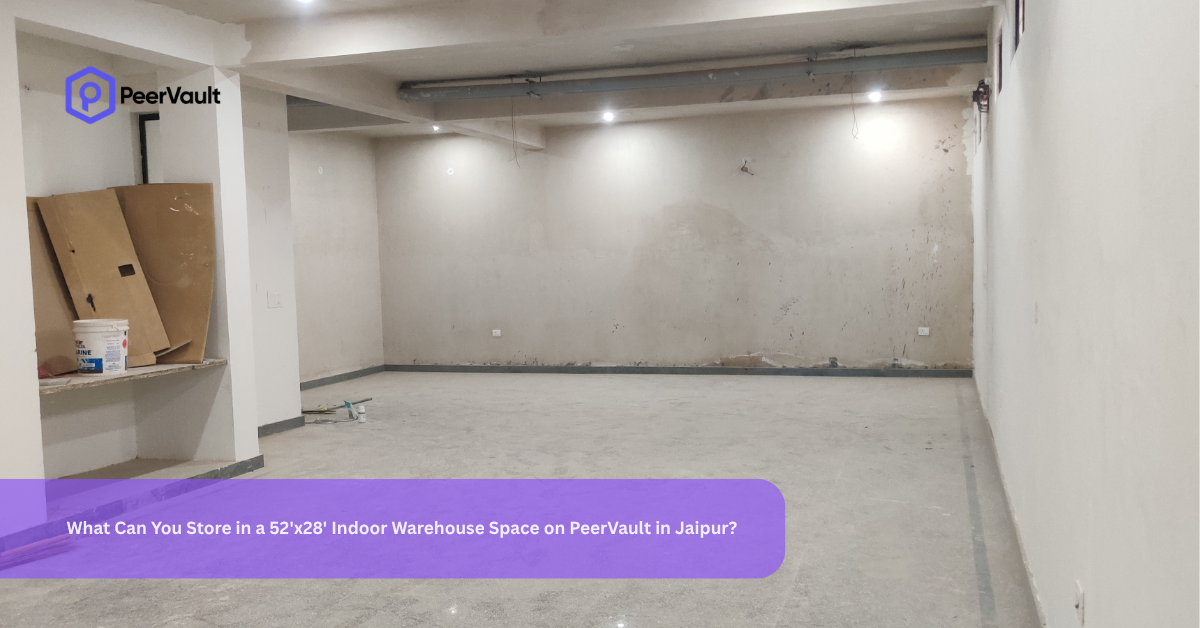
This 52’x28′ (≈1,456 sq ft) indoor warehouse in Mansarovar, Jaipur, listed on PeerVault for ₹60,000/month, is a solid mid-sized option for e-commerce fulfilment, wholesale stock, small manufacturing materials, seasonal overflow, or general document/equipment storage. It’s a private, locked, camera-monitored corner property with daily daytime access by appointment good for businesses that need real storage without committing to a huge facility or a long lease. It’s not built for heavy industrial loads, cold storage, or high-volume truck traffic. Before renting, confirm ceiling height, access flexibility, and whether the ₹60,000 rate covers maintenance and utilities. PeerVault’s short-term rental options and verified-host system make it a simpler alternative to traditional warehouse leasing in Jaipur.
If you have ever tried to find warehouse space in Jaipur on short notice, you already know the drill. Either the space is too big and too expensive, or it’s too small and you’re stacking boxes in the hallway by month two. Somewhere in between those two extremes sits a size that actually works for a lot of small and mid-sized businesses — and that’s exactly what this listing offers.
There’s a 52’x28′ Warehouse – Indoor location Jaipur, Rajasthan listed on PeerVault that’s worth a closer look if you’re weighing your storage options in the city. In this article, we’ll walk through what a space this size can realistically hold, who it tends to suit, what to check before you commit, and how renting through a platform like PeerVault compares to going the traditional route.
First, Let’s Talk About the Numbers
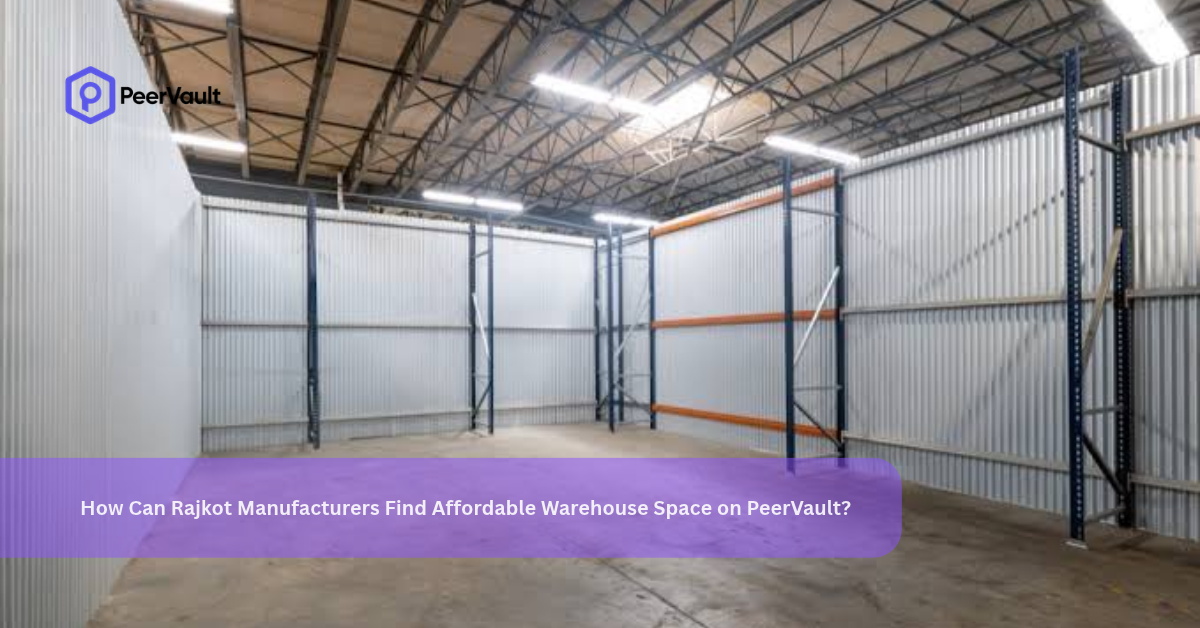
A 52 feet by 28 feet warehouse works out to roughly 1,456 square feet of floor space. That’s not a small storeroom, but it’s also not an industrial-scale facility either. Think of it as a middle-ground option big enough to run a real operation out of, small enough that you’re not paying for square footage you’ll never use.
This particular listing is located in the Mansarovar area of Jaipur, at a corner property along a well-connected stretch of road near St. Anselm’s School. Corner plots like this tend to be easier to access for loading and unloading, since you’re not squeezed into a narrow lane with limited turning room for vehicles.
The space is priced at ₹60,000 per month, and it comes with a set of features that matter more than people usually realize until they’re missing: it’s a private, locked area with security camera monitoring and daily access. For anyone who has dealt with a shared or semi-open storage yard, that combination of privacy and surveillance is a genuine upgrade.
So, What Can You Actually Store Here?
This is the question most people searching for warehouse space actually want answered, so let’s get into specifics rather than vague generalities.
1. E-commerce Inventory and Fulfilment Stock
Jaipur has become a meaningful hub for online sellers dealing in textiles, handicrafts, jewellery, footwear, and home decor categories the city is historically known for. A space of this size is well suited to holding a rotating stock of packaged goods, especially if you’re running a fulfilment operation where inventory turns over every few weeks rather than sitting for months.
With roughly 1,450 square feet, you could reasonably fit several rows of shelving units along with a packing station, leaving enough floor space for a small forklift or hand trolley to move between aisles.
2. Wholesale and B2B Stock Holding
If you supply retailers rather than end consumers, this size range often works well as a staging point. Wholesalers dealing in garments, footwear, or general merchandise frequently need a space where goods can sit for a short window between arriving from a manufacturer and going out to buyers. A locked, monitored indoor space checks the basic boxes for that kind of short-to-medium term holding.
3. Furniture and Home Goods
Furniture doesn’t stack the way boxes do, so the actual usable capacity in a warehouse depends heavily on the size and shape of the items. Even so, a space like this can typically hold a reasonable inventory of mid-sized furniture pieces, chairs, small tables, cabinets if arranged thoughtfully. It’s less suited to bulky items like large sofas or full bedroom sets in high volume, simply because those eat up floor space fast.
4. Raw Materials for Small Manufacturing or Assembly
Small manufacturing setups think garment stitching units, handicraft assembly, or packaging operations often need somewhere to keep raw material and finished goods separate from the actual work floor. A space this size can serve as that adjoining storage point, particularly if the manufacturing itself happens elsewhere and this location is purely for materials and output.
5. Seasonal and Overflow Stock
Retailers dealing in seasonal categories festive decor, winter wear, event supplies often hit a point in the year where their existing storage simply isn’t enough. Renting a space like this for a few months around peak season, rather than committing to a year-round lease, is one of the more practical uses of a mid-sized warehouse.
6. Documents, Equipment, and Office Overflow
Not every use case involves boxes of product. Businesses sometimes need a secure, monitored space to store old records, office furniture being phased out, or equipment that isn’t in daily use but can’t thrown away either. A locked indoor unit with camera monitoring is arguably a better home for sensitive documents than a spare room at the office.
What This Space Is Probably Not Ideal For
It’s worth being honest about limitations too, since that’s part of making a good decision.
- Heavy industrial storage involving large machinery or bulk raw materials (steel, cement, chemicals) usually needs more floor-to-ceiling clearance and load-bearing considerations than a general-purpose indoor space like this is built for.
- Cold storage or perishables aren’t a fit unless the listing specifically mentions temperature control, which this one does not.
- Very high-volume operations of the kind that need multiple loading docks and constant truck movement will likely outgrow 1,456 square feet quickly.
If your business falls into one of these categories, it’s worth having a direct conversation with the host about the property’s specifications before assuming it’ll work.
How to Judge Whether the Size Actually Fits Your Business
A number on a listing page doesn’t tell you much until you translate it into your own inventory. Here’s a rough way to think about it:
Start with your current stock volume. If you’re currently storing goods in a space smaller than this, you likely have room to grow into it. If you’re already renting something close to this size and running out of room, this might only buy you a temporary reprieve.
Account for aisle space, not just shelf space. A common mistake is calculating capacity as if the entire floor area will hold product. In reality, you need walking and trolley space between shelving rows, plus a clear zone near the entrance for loading and unloading. A realistic estimate is that 60-70% of the total area ends up usable for actual storage once you factor in movement space.
Think about vertical storage. If the space has decent ceiling height, shelving that goes upward rather than just outward can meaningfully increase how much you can store without needing more floor area. It’s worth asking the host about ceiling height specifically, since that detail isn’t always obvious from photos.
Factor in access frequency. This listing notes that access is available daily during daytime hours, with appointments required. If your business needs round-the-clock access, say, for a delivery operation running late-night dispatches it’s worth confirming this detail directly with the host before signing anything.
What to Check Before You Commit to Any Warehouse Space
Whether it’s this particular listing or another one entirely, there are a few basics worth confirming before you finalize a rental :
1. Physical condition of the space. Ask for recent photos or, better, visit in person. Check for signs of water seepage, flooring condition, and whether the electrical setup can support your equipment.
2. Access terms. Confirm exactly when and how you can enter daily hours, weekend access, and whether advance notice is required.
3. Security arrangements. A locked, camera-monitored space is a good baseline, but ask who reviews the footage and how quickly issues get flagged if something goes wrong.
4. Loading and unloading logistics. Corner properties on wider roads, like this one, generally make it easier for trucks and delivery vehicles to approach without navigating tight turns.
5. Lease flexibility. Find out whether the rental can extended, shortened, or adjusted if your storage needs change partway through.
6. Total cost clarity. Confirm whether the quoted monthly rate includes everything, or whether there are separate charges for maintenance, security, or utilities.
Why More Businesses Are Renting Warehouse Space Through PeerVault
Traditional warehouse leasing in India often comes with long lock-in periods, brokers taking a cut, and a fair amount of back-and-forth before you even get to see the property. Platforms like PeerVault are changing that pattern by connecting people who have unused or underused space directly with businesses that need it.
For someone looking for storage in Jaipur specifically, this matters for a few reasons :
- Shorter commitment options. Instead of being locked into a multi-year lease, you can rent by the week, two weeks, or month, depending on what the listing allows.
- Direct communication with the host. You can message the property owner directly through the platform rather than working through multiple intermediaries.
- Verified users on both sides. PeerVault requires identity verification, which reduces the usual uncertainty that comes with renting property from someone you’ve never dealt with before.
- Transparent pricing upfront. The monthly rate is listed clearly, so you know what you’re working with before you even reach out.
This particular listing of the 52’x28′ Warehouse – Indoor location Jaipur, Rajasthan reflects that model. You can see the price, the features, the access terms, and the host’s details before deciding whether to take the next step.
A Quick Word on Location
Mansarovar is one of Jaipur’s more established residential and commercial areas, which brings a couple of practical advantages. It’s well connected by road, has decent access to labour for loading and unloading, and isn’t so far removed from the city centre that transport costs become a burden. For businesses distributing goods within Jaipur or to nearby towns in Rajasthan, a location like this cuts down on travel time compared to warehouses pushed out to the far edges of the city.
Final Thoughts
A 52’x28′ indoor warehouse isn’t a one-size-fits-all answer, but for a specific band of businesses online sellers, wholesalers, small manufacturers, and seasonal retailers it hits a practical middle ground between too little space and too much overhead. The combination of a locked, monitored, corner-located property in Mansarovar, paired with the flexibility of a platform-based rental, makes this listing worth a genuine look if you’re storage-hunting in Jaipur right now.
If the size and features line up with what you need, the next step is simple: reach out to the host through the listing, ask the specific questions relevant to your business, and see the space in person before making a decision. Storage is one of those costs that’s easy to get wrong in either direction. Too small and you’re constantly troubleshooting, too big and you’re paying for empty floor space. Getting the size right from the start saves a lot of hassle down the line.
Contact Us to Book This Warehouse Space in Jaipur
Popular Posts