

How Does Peervault Self Storage in Geyzing Work for Monthly Storage Needs?
TL;DR :
Peervault’s monthly self storage in Geyzing lets you rent a unit one month at a time instead of signing a long lease you pick a size, sign a rolling agreement, provide ID and payment details, and get access credentials. It costs a bit more than long-term plans but comes with the same access and security as any other renter, and you can leave anytime as long as you give proper notice (usually a few days to a few weeks). It’s best suited for movers, renovators, small businesses, students, and anyone whose storage needs aren’t tied to a fixed timeline.
If you’ve ever stood in the middle of a half-packed room wondering where all your stuff is supposed to go, you already understand the appeal of self storage. But renting a unit isn’t always as simple as it looks online. How long is the commitment? What happens if you need the space for just a few months? Can you get in and out whenever you want?
For anyone considering Peervault Self Storage in Geyzing, these are the exact questions worth answering before you sign anything. This guide walks through how monthly storage actually works at Peervault from booking a unit to what happens when your needs change halfway through the rental.
What “Monthly Storage” Actually Means
Monthly self storage is exactly what it sounds like: a rolling rental arrangement where you pay for space one month at a time, rather than locking into a six-month or year-long lease.Most customers choose it when they are unsure of how long they will require more room like a move, renovation, sluggish business season, or just while decluttering a home.
At Peervault, monthly plans are built around flexibility rather than long-term obligation. You’re not tied to a fixed end date, and you’re not penalized for stopping early once your notice period is met. That structure tends to suit people whose storage needs are tied to a specific life event rather than something ongoing.
Getting Started : The Booking Process
Renting a unit at Peervault in Geyzing typically follows a fairly straightforward sequence :
1. Choosing a unit size. Most facilities, Peervault included, offer a range of sizes from small lockers suited to boxes and seasonal items, up to larger rooms that can hold the contents of a multi-bedroom home or a small business’s inventory. Staff usually walk new customers through size options based on what they’re storing, rather than leaving them to guess.
2. Checking availability. Because monthly renters come and go, unit availability shifts fairly often. It’s worth calling ahead or checking online before showing up, especially if you need a specific size on short notice.
3. Signing the agreement. This is where the “monthly” part matters most. Instead of a long-term lease, you’re signing a rolling agreement one that renews automatically each month unless you give notice to end it. Read this section carefully, since notice periods (commonly somewhere between a few days and a full month) vary by facility.
4. Providing ID and payment details. Standard practice across most storage providers, and Peervault is no exception. You’ll usually need a valid photo ID and a payment method on file for automatic monthly billing.
5. Getting access credentials. Once the paperwork is done, you’re issued whatever access method the facility uses a key, a code, or a card along with instructions for entering the site.
How Pricing Works on a Month-to-Month Basis
One of the more practical questions people have is whether monthly storage costs more than a longer commitment. Generally, yes facilities often offer a modest discount for customers who commit to three, six, or twelve months upfront. Monthly plans trade that discount for flexibility.
At Peervault, pricing for monthly units in Geyzing is typically based on :
- Unit size (measured in square footage)
- Whether the unit is climate-controlled
- Ground-floor versus upper-level access
- Current demand and seasonal availability
It’s common for storage providers to run promotional rates for new customers in the first month, so it’s worth asking directly what current offers apply rather than assuming a fixed rate. Just don’t expect promotional pricing to carry through the full rental most reset to standard rates after an initial period.
Access and Security for Monthly Renters
A recurring concern with any storage facility is simple: can I get to my belongings when I actually need them, and are they safe in the meantime?
Monthly renters at Peervault generally have the same access rights as long-term customers; there’s no reduced privilege for choosing flexibility over commitment. Typical access setups include :
- Extended hours of access each day, usually from early in the morning to late at nite
- Personal entry codes or key access tied to your specific unit
- On-site cameras covering common areas and corridors
- Individually alarmed units in some facility types
If security features matter more to you than price say, you’re storing business equipment or documents it’s worth asking specifically what’s included at the Geyzing location, since features can vary between branches even within the same company.
Who Actually Uses Monthly Self Storage?
Monthly plans tend to attract a fairly specific set of situations rather than one type of customer :
People between homes. Whether it’s a delayed move-in date or a gap between selling one property and buying another, monthly storage bridges the timing without forcing a long-term commitment.
Renovators. Homeowners mid-renovation often need furniture and belongings out of the way for a few weeks or months, rarely longer, and rarely predictable enough to plan around a fixed lease.
Small business owners. Retailers with seasonal stock, tradespeople with equipment, or freelancers without office space often use monthly units as flexible overflow storage rather than paying for permanent commercial space.
Students and short-term residents. Academic terms and temporary work assignments rarely align neatly with annual leases, making month-to-month storage a natural fit.
Downsizers. People moving to smaller homes sometimes need a temporary holding space while they sort through belongings at a slower pace.
Choosing the Right Unit Size
Getting the size wrong is probably the most common mistake among first-time renters either paying for more room than needed, or cramming too much into a space that turns into a puzzle every time you visit.
As a rough guide :
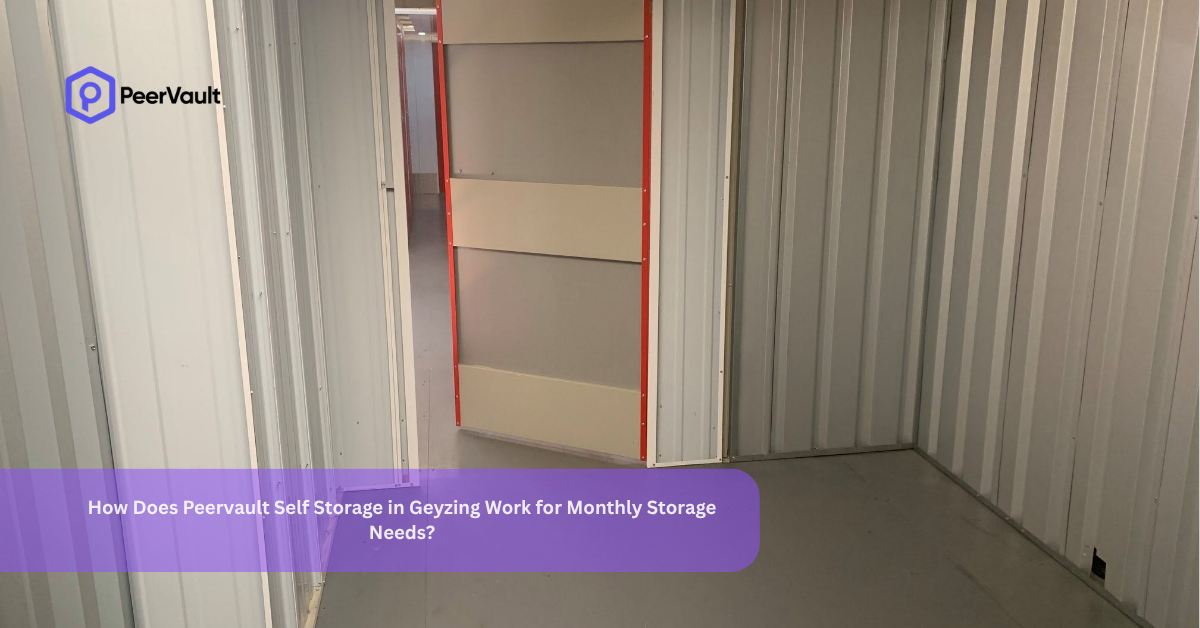
- Small units (roughly the size of a closet) suit boxes, seasonal decorations, and small furniture pieces.
- Medium units can typically hold the contents of a one- or two-bedroom apartment, including larger furniture.
- Large units are generally sized for full households, business inventory, or vehicles in some cases.
Staff at Peervault’s Geyzing location can usually help estimate size based on a rough inventory list, which tends to be more reliable than guessing from general size charts alone.
What Happens When You Want to Leave
Because monthly storage doesn’t lock you into a long contract, ending the arrangement is usually simpler than starting it. Most facilities, including Peervault, require written or in-person notice within a set window often a few days to a few weeks before your next billing cycle. Missing that window typically means being billed for an extra month, so it’s worth marking a reminder if you know your end date in advance.
Before vacating, most facilities expect the unit to be cleared out and reasonably clean, with keys or access devices returned. A quick walkthrough with staff can confirm everything’s settled and avoid any surprise charges after you’ve moved out.
Frequently Asked Questions
Is there a minimum rental period for monthly storage at Peervault in Geyzing?
Most monthly plans don’t require a long minimum stay beyond the first billing cycle, though it’s worth confirming directly, since policies can differ by unit type.
Can I switch to a larger or smaller unit partway through my rental?
Generally yes, subject to availability. Many storage customers start smaller and upgrade once they see how much space they actually need.
Does monthly storage cost more than a long-term lease?
Usually somewhat more per month, since the flexibility of no long-term commitment typically comes at a slight premium compared to discounted longer contracts.
What occurs if I fail to make a monthly payment?
Policies vary, but most facilities apply a grace period before late fees or access restrictions kick in. It’s best to confirm the exact terms in your agreement.
Is it possible for me to enter my unit after regular business hours?
Many facilities, Peervault included, offer extended access windows well beyond typical office hours, though it’s worth checking exact times for the Geyzing site specifically.
Final Thoughts
Monthly self storage works best for anyone who values flexibility over long-term savings, people whose timelines aren’t fixed, whose needs might shift, or who simply don’t want to be locked into a contract that outlasts the reason they needed storage in the first place. Understanding the booking process, pricing structure, and notice requirements ahead of time makes the whole experience considerably less stressful, whether you’re storing a few boxes during a move or running an entire business’s overflow inventory out of a single unit.
Before committing, it’s always worth a direct conversation with the Peervault team in Geyzing policies, promotions, and available unit sizes shift often enough that a quick call can save you from assumptions that don’t quite match reality.
Need Monthly Storage in Geyzing? Contact Us to Get Started with PeerVault.
Popular Posts