How Do Goa Tourists and Locals Find Secure Parking in Panaji and Margao? A PeerVault Guide
TL;DR
- Parking in Panaji and Margao gets tight during peak tourist season (roughly October to March), festivals, and market days. Narrow heritage lanes and crowded commercial areas make it worse.
- Street parking is cheap but carries real risks: fines, towing, dents, and theft. Hotel and public lots help, but they fill up fast.
- Renting a private space such as a garage, courtyard, or covered slot, by the day, week, or month, is often the calmest option. PeerVault is a peer-to-peer platform where hosts list spaces and renters book them.
- Before you book, check access hours, security, whether the space is covered, vehicle size fit, and the terms in writing.
- Goa’s salt air and monsoon rain are hard on cars, so covered parking matters more here than in most Indian cities.
- Locals with an unused garage or courtyard can earn from it by listing it for rent.
Why Is Parking So Hard in Panaji and Margao?
Finding your destination in Goa is easy. Finding somewhere to leave the car is the hard part.
Goa is widely reported to have one of the highest rates of vehicle ownership in India. Add rental cars, visitors’ vehicles, and scooters during the tourist season, and a small state’s roads and parking areas carry far more than they were designed for.
Panaji and Margao feel this in different ways. Panaji is the capital: a compact city of government offices, restaurants, casinos, riverfront promenades, and heritage neighbourhoods. Margao is the commercial heart of South Goa, with a busy market, a major railway station, and heavy daily traffic from surrounding villages.
In both towns, demand for parking peaks at exactly the times you most want to be out and about: weekends, long holidays, Christmas and New Year, Carnival, and big event days. The result is circling, stress, and often a rushed decision to park somewhere you would not normally trust.
This guide covers your real options, what to check before you commit, and how renting a private space through PeerVault fits in. It is written for two groups: visitors who need somewhere safe for a few days, and residents who are short of parking or have spare space to share.
Parking in Panaji : What to Expect
Panaji rewards walking, which is exactly why parking is a puzzle. The areas most people want to see sit close together, and many of them were laid out long before cars.
Fontainhas and the Latin Quarter. The colourful lanes are narrow, residential, and not built for visitor traffic. Parking on the lane itself can block residents and invite complaints. If you are staying here, ask your host early whether any parking is available, and have a backup plan.
Campal, Miramar, and the riverfront. These stretches are popular with locals and tourists in the evenings. Informal parking along the road fills quickly at sunset and on weekends. Arriving early helps, but it is not a plan you can rely on.
Around the market and city centre. Short-stay parking turns over quickly, but long stays can be difficult. Paid and regulated parking exists in parts of the city, and rules and rates can change, so check signage on the day.
Near the bus stand and transport points. Travellers who leave their car while taking a bus or train often want parking by the day or for several days. Open roadside spots are a gamble for anything longer than a few hours.
The common thread: Panaji is best experienced on foot, so the smartest move is often to park once, somewhere secure, and leave the car there.
Parking in Margao : What to Expect
Margao works differently. It is less about sightseeing and more about daily life, so the pressure on parking is constant rather than seasonal.
Market and commercial areas. Shoppers, delivery vehicles, and shopkeepers’ own cars compete for limited kerb space. Parking here is fine for a quick errand and frustrating for anything longer.
Railway station and surrounding roads. Travelers who drive to the station often need to leave a car for days. Station-side space is limited, and leaving a vehicle unattended for long stretches on public roads carries risk.
Residential neighbourhoods. Many older buildings and apartment blocks have limited or no dedicated parking. Families with two cars, or with visitors staying over, regularly run out of room.
A base for South Goa. Many visitors use Margao as a base for beaches like Colva and Benaulim. Those who arrive by car need a dependable place to leave it while they explore, especially if they are switching to taxis or scooters.
Your Parking Options, Compared
Here is an honest look at the main choices in both towns.
1. Street or roadside parking. Pros: free or very cheap, no booking. Cons: no security, risk of fines or towing if you park in a restricted spot, exposure to dents, scratches, and weather. Best for short stops only.
2. Public paid lots. Pros: regulated, usually central. Cons: limited capacity, closing times, and unclear liability if something goes wrong. Fine for a few hours; less suited to overnight or multi-day stays.
3. Hotel or guesthouse parking. Pros: convenient if included. Cons: many smaller properties have only a couple of slots, and some charge extra or cannot guarantee a space during peak season. Always confirm before you arrive.
4. Society or apartment parking. Pros: often secure and gated. Cons: usually reserved for residents, and visitor slots are scarce. Renting out a slot to an outsider may also be restricted by society rules, so check before you assume it is allowed.
5. Privately rented space. Pros: flexible durations, often closer to where you actually need to be, and you deal with a specific host about a specific space. Cons: quality varies, so you need to check the details. This is the category PeerVault is built around.
How PeerVault Helps Renters
PeerVault is a peer-to-peer marketplace where people list spare space and others rent it. It covers storage of many kinds, and it has a dedicated Car Storage category. In practice, that means a homeowner in Panaji or Margao with an unused garage, courtyard, or covered slot can list it, and a driver who needs parking can find it.
For renters, the appeal is simple :
- You choose the duration. A weekend, a fortnight, or a long-term monthly arrangement, depending on what the host offers.
- You can search by location. Listings are tied to specific areas, so you can look near the neighbourhood you actually care about rather than settling for whatever is left.
- You see what you are renting. Listings describe the space, so you can compare before committing.
- You can plan ahead. Booking before a trip removes the last-minute scramble that peak season creates.
You can browse listings on the PeerVault website, or use the PeerVault app from Google Play.
A Practical Checklist Before You Book
Whatever platform or arrangement you use, run through these questions before handing over your keys or leaving your car.
Access. Can you reach the car at any hour, or only during set times? If you are catching an early flight or a late train, this matters more than price.
Security. Is the space gated, locked, or watched? Ask what protection actually exists rather than assuming. Do not accept vague answers.
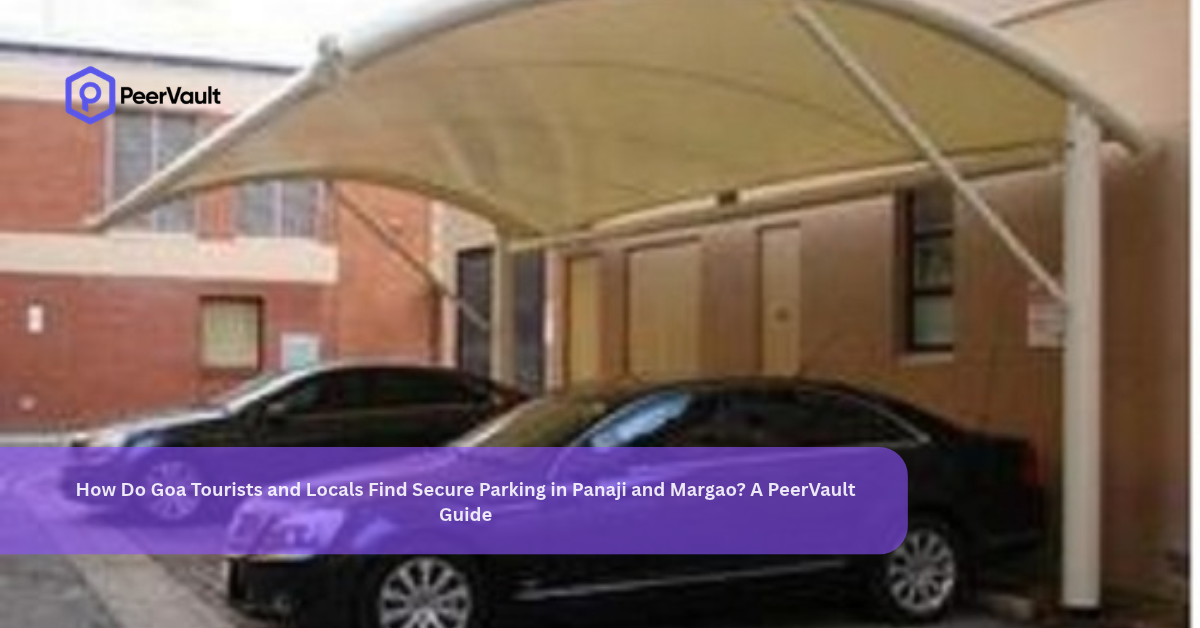
Covered or open. In Goa this is a big deal. Covered parking protects against monsoon downpours and against sun and salt air, which brings us to the next point.
Size and entry. Check that your vehicle physically fits. Older Goan houses often have narrow gates and tight turns, and an SUV that looks fine on paper may not manoeuvre in.
Terms in writing. Agree on dates, price, payment method, and what happens if plans change. Clear terms protect both sides.
Condition photos. Take photos of your car at drop-off, showing all sides. It takes a minute and settles disputes quickly.
Valuables. Never leave documents, electronics, or luggage inside the car, whatever the security.
Insurance. Check what your own motor policy covers when the car is parked somewhere other than your usual spot. If you are unsure, ask your insurer before a long absence.
Why Covered Parking Matters More in Goa
Goa’s climate is lovely for people and tough on cars.
The monsoon runs for months, and heavy rain, falling branches, and waterlogging are all realities. A covered, raised, or well-drained space protects paintwork, electricals, and interiors.
Coastal air is salty and humid, which speeds up corrosion on bodywork and underbody parts. A car left outdoors for weeks near the coast will show it, especially if it is already a few years old.
In the dry season, strong sun fades paint and bakes dashboards. Shade helps.
If you are leaving a car for more than a few days, covered parking is not a luxury here. It is part of looking after the vehicle. When browsing listings, filter or look for covered options, and ask hosts directly about drainage and ventilation if you are parking through the monsoon.
Tips for Tourists
- Decide on parking before you arrive. Do not leave it for when you reach Panaji or Margao on a busy evening.
- Ask your accommodation first. Many hosts know nearby private spaces, and some can reserve you a slot.
- Consider parking once and walking. In Panaji especially, a secure spot near your base beats repeated hunts for kerb space.
- Mind the calendar. Peak season, festival weekends, and big events stretch every option. Book earlier for those dates.
- Keep it legal. Obey no-parking signs. Towing and fines cost more than a rented space ever will.
- Keep contact details handy. Save the host’s number and the exact address so you can reach the car easily.
Tips for Locals Who Need Parking
Residents face a different problem: not a few days, but every day.
If your building offers only one slot and you own two vehicles, or if guests regularly visit, a monthly rented space nearby can be cheaper and less stressful than daily roadside gambling. When comparing, think about distance. A space you can reach in a few minutes on foot is far more useful than a cheaper one across town.
It also helps to look at the arrangement as a relationship, not a transaction. A reliable host and a clear understanding of access, payment, and notice periods make a monthly arrangement smooth.
Got a spare space? Turn It Into Income
For Goan homeowners, this works the other way too. Many houses in Panaji and Margao have a garage that has become a storeroom, a side courtyard, or a driveway that is empty during the day while the family is out.
Listing a space on PeerVault lets you share it with someone who needs it. A few things help your listing stand out :
- Clear photos taken in good light, showing the entrance and the parking area.
- Accurate details such as dimensions, whether it is covered, and any gate or lock arrangements.
- Honest availability so renters know when they can come and go.
- Sensible pricing based on location, demand, and what similar spaces offer.
- Fast, polite replies because renters often book trips at short notice.
Before you list, check any rules that might apply to you, such as housing society bylaws or lease terms, and consider how renting space might affect your own insurance or tax position. If you are unsure, speak to a professional.
Frequently Asked Questions
Is it safe to park on the street in Panaji or Margao overnight?
It can be fine for a night in a quiet residential area, but it comes with risks: no security, possible fines or towing, and weather exposure. For longer stays, a private, secured space is the safer choice.
How far ahead should I book parking for Goa’s peak season?
As early as your travel plans allow. December and New Year are the tightest periods, and good spaces near popular areas go first.
Can I rent parking for just a weekend?
That depends on the host’s listing. Many spaces are offered flexibly, so check the duration options on the listing.
What should I do if my car is dented or damaged in a rented space?
Document it with photos immediately, tell the host, and contact your insurer. This is why drop-off photos and clear terms are so valuable.
Do I need covered parking?
If the car will sit for more than a few days, especially in monsoon months or near the coast, yes, it is strongly worth it.
Final Thoughts
Parking in Panaji and Margao does not have to be a daily argument with the map. The towns are compact, the pressure is predictable, and the best answer is usually the same: decide early, choose a secure and preferably covered space, and agree on the details in writing.
For visitors, that means less stress and more time on the riverfront, in the lanes of Fontainhas, or on the beaches of the south. For locals, it means a dependable spot for the second car or a way to earn from space you are not using.
If you are planning a trip to Goa or struggling with parking at home, browse the Car Storage listings on PeerVault and see what is available near where you need it. If you have space to share, listing it takes only a few minutes and puts it to work.
Contact Us to List Your Unused Parking Space in Goa
Popular Posts
How Do I List My Garage or Driveway in Itanagar on PeerVault?