

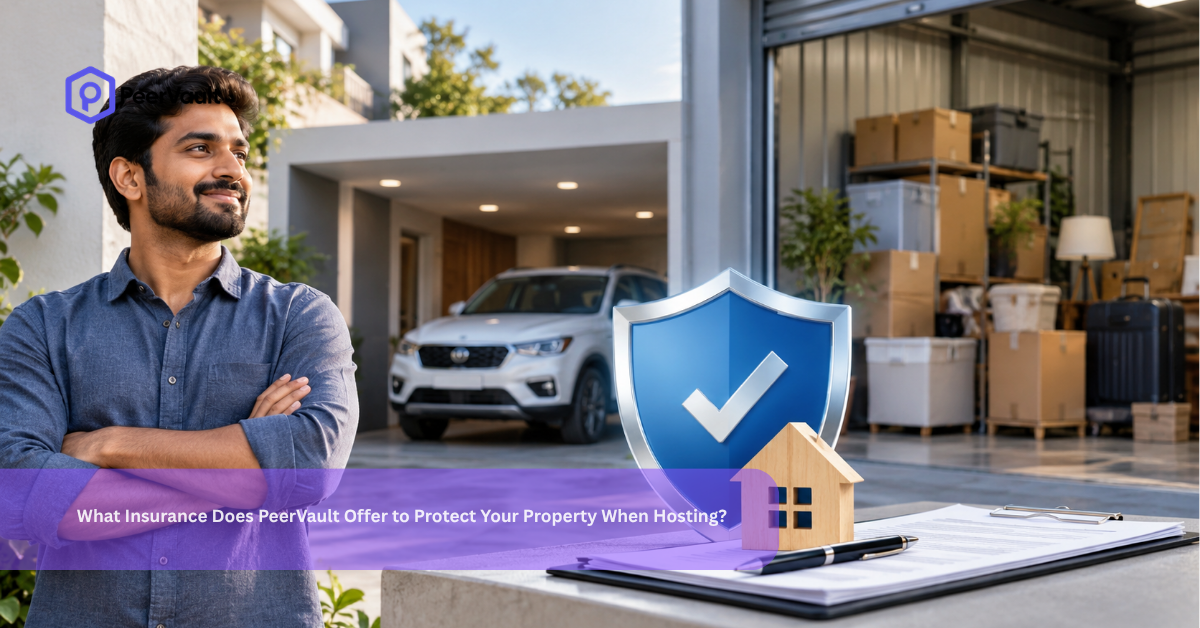
What Insurance Does PeerVault Offer to Protect Your Property When Hosting?
TL;DR
PeerVault offers insurance protection for hosts and renters, but it only applies to bookings made and paid for entirely through the platform, not arrangements made outside the app. Coverage generally splits into two parts: liability protection for damage to the host’s property, and contents insurance for the renter’s stored belongings. Most claims require documentation (photos before/after, in-app messages), and common exclusions include pre-existing damage, normal wear and tear, high-value items like jewelry or cash, and disputes with no supporting evidence. Platform insurance is not a replacement for your own homeowner’s or commercial property insurance, and coverage limits may vary by listing type (self storage, parking, warehouse). Since exact terms can change over time, hosts should confirm current coverage limits and claim processes directly in the PeerVault app before listing, especially for high-value spaces.
If you’re thinking about listing a garage, a spare room, or an empty warehouse bay on PeerVault, one question almost always comes before “how much can I earn”: what happens if something goes wrong? Renting out physical space to someone you’ve never met carries a different kind of risk than, say, renting out a spare bedroom to a friend. Property gets damaged, disputes happen, and unless you understand exactly what protection is in place, you could end up covering losses out of your own pocket.
This article breaks down how insurance protection works for PeerVault hosts, what it’s designed to cover, where its limits typically sit, and what you should still check for yourself before listing your space. Some of these mechanics are common across peer-to-peer storage platforms in general, and some are specific to how PeerVault structures its host protection; we’ll flag the difference as we go.
Why Hosts Need to Think About Insurance in the First Place
Hosting on a peer-to-peer storage marketplace is fundamentally different from traditional self-storage businesses, where a single company owns the warehouse, controls access, and carries commercial insurance across the entire facility. On PeerVault, the space itself is a garage, a parking spot, a portion of a warehouse belongs to an individual or a small business owner, not to the platform.
That distinction matters. When you host, you’re exposing part of your own property to a stranger’s belongings, vehicle, or goods for weeks or months at a time. A few things can go wrong even with careful renters:
- A renter’s stored goods might get damaged and they hold you responsible, even when the damage wasn’t caused by your negligence.
- Structural damage could occur to your property itself: a wall scraped by a vehicle, a door damaged during move-in.
- A dispute could arise over what was actually stored, its condition on drop-off, or who’s liable if something goes missing.
Without some form of protection built into the platform, hosts would be taking on all of this risk simply for offering space they already own but weren’t using. This is exactly the kind of exposure insurance protection on PeerVault is meant to reduce.
What “Insurance Protection” Actually Means on a P2P Storage Platform
It helps to separate two things that often get lumped together: liability protection and contents insurance.
Liability protection is about who is financially responsible when a booking goes wrong for example, if a renter’s vehicle scrapes your garage wall while parking, or a piece of furniture stored in your space causes damage during a move-out. This type of protection generally shields the host from bearing the full cost of a dispute alone.
Contents insurance, on the other hand, usually protects the renter’s belongings while they’re stored in someone else’s space covering things like fire, theft, or water damage to the stored items themselves.
PeerVault’s own platform messaging describes both angles as part of what it calls “Insurance Protection” giving hosts and renters a way to protect against unforeseen damage or loss during the storage period. In practice, this is designed to sit alongside not replace the verification and communication tools on the platform (like ID-verified users and in-app messaging), which are meant to reduce the odds of a bad booking happening at all.
A Note on Specifics
Because insurance terms, coverage limits, and claim processes are the kind of detail that platforms update as they scale (adding new insurers, adjusting limits, refining claim timelines), it’s worth treating the exact numbers as something you confirm directly in the PeerVault app or host agreement rather than something fixed forever. What stays constant is the purpose of the protection, reducing the financial exposure of hosting unused space to strangers. What can change year to year is the fine print: coverage caps, exclusions, and how quickly claims are processed.
How the Protection Typically Applies When You Host
To understand how this works in practice, it helps to walk through the lifecycle of a typical booking.
1. A renter books your space through the platform.
This step is more important than it may appear. Protection on peer-to-peer platforms is almost always tied to bookings made through the platform itself meaning the payment, the messaging, and the agreement all happen inside PeerVault. If a renter finds your listing but then arranges payment or access outside the app, that booking typically falls outside any protection PeerVault offers, because the platform has no record of the terms agreed to.
2. The rental period begins.
Once a booking is confirmed and the renter has access to the space, the protection window generally becomes active for the duration of that listed rental period whether that’s a month-to-month self-storage unit, a warehouse lease, or a car parking spot.
3. Something goes wrong.
This is where the difference between liability protection and contents insurance becomes practical. If the renter’s stored goods are damaged, that’s typically addressed through contents-side coverage tied to the renter’s declared value of the goods. If your property itself is damaged, a gate broken, a wall marked, flooring scratched by heavy items that’s where host-side liability protection is meant to come in.
4. A claim gets filed.
Most peer-to-peer marketplaces require documentation: photos of the space before and after the booking, a description of what happened, and sometimes a police report for theft-related claims. This is one of the most important things a host can do proactively documenting the condition of your space before a renter moves in gives you something to compare against if a dispute arises later.
What’s Usually Covered and What Typically Isn’t
This is where hosts often run into surprises, so it’s worth being direct about it.
Generally covered, in one form or another, on P2P storage platforms :
- Accidental damage to the host’s property caused during a booking (walls, doors, flooring, gates)
- Theft or loss of a renter’s stored belongings while under lock and covered by the platform’s terms
- Disputes where the booking was made and paid for entirely through the platform
Generally excluded or limited :
- Pre-existing damage to the property that existed before the renter arrived
- Damage from normal wear and tear rather than a specific incident
- High-value items (jewelry, cash, important original documents) that typically require separate declaration or aren’t eligible for standard coverage at all
- Bookings arranged or paid for outside the platform
- Damage caused by natural disasters, unless separately specified in the policy terms
- Disputes where there’s no supporting documentation (photos, messages) to establish what happened
If you’re hosting a warehouse full of commercial inventory, this list matters even more than if you’re renting out a single parking spot, simply because the potential dollar value at risk is much higher. It’s worth asking directly, before listing high-value commercial space, whether coverage limits are proportional to the type of space (self-storage vs. warehouse vs. parking) or flat across all listing types.
A Practical Example
Say you list a portion of your garage as car parking. A renter books it for three months to park a sedan while they travel for work. In month two, another vehicle backing out of a neighboring spot on your property scrapes the renter’s car not caused by you, not caused by the renter, but happening on your listed space.
In a case like this, the sequence generally looks like :
1. The renter reports the incident through the platform, ideally with photos and a timestamp.
2. You, as the host, confirm what you observed (CCTV footage, if you have it, helps enormously here).
3. The claim gets reviewed against the terms of the booking and the coverage in place.
4. Depending on the circumstances and documentation, a resolution is reached which could involve the platform’s protection, the renter’s own vehicle insurance, or a mix of both.
This example illustrates something worth repeating: insurance protection on a peer-to-peer platform works best when it’s backed by documentation. Photos at drop-off, clear messaging through the app, and a written description of the space’s condition aren’t just good practice; they’re often what determines whether a claim gets resolved quickly or drags on.
Common Misconceptions Hosts Have About Platform Insurance
“The platform’s insurance means I don’t need my own home or property insurance.”
This is one of the more common and riskier assumptions. Platform-provided protection on P2P marketplaces is generally designed to cover incidents tied specifically to a booking, not to replace a host’s underlying homeowner’s, renter’s, or commercial property insurance. If you’re using part of your property for hosting regularly, it’s worth checking with your own insurer whether your existing policy has any exclusions around commercial or semi-commercial use of the space some homeowner policies do.
“Coverage is automatic and unlimited.”
Coverage on virtually every P2P platform storage, parking, or otherwise comes with limits and exclusions. Treating it as a blanket safety net rather than reading through what’s actually included is one of the most common reasons hosts are caught off guard when a claim doesn’t go the way they expected.
“I don’t need to document anything since the platform verifies renters.”
Verification (ID checks, ratings, reviews) reduces the likelihood of a bad actor booking your space; it doesn’t replace the evidence needed to resolve a dispute. These are two separate layers of protection, and skipping documentation because renters are verified is a common gap.
“Insurance covers disagreements about price or booking terms.”
Insurance protection is about property damage and loss, not commercial disagreements. If a renter disputes the price they were charged or claims they were promised something different, that’s a customer service or terms-of-service issue, not an insurance claim.
What Hosts Should Do Before Listing High-Value Space
If you’re hosting something more significant than a parking spot a warehouse bay, a large storage unit for someone else’s business inventory a few extra steps are worth taking regardless of what the platform’s default protection covers :
- Ask directly what the maximum payout is per claim, and whether that scales with the type of listing.
- Keep your own photographic record of the space’s condition, updated between bookings.
- Consider whether your own commercial or property insurer should be aware that part of your space is being used for paid storage.
- Read the host agreement’s section on claims timelines how long you have to report an incident, and how long resolution typically takes.
The Bottom Line
Insurance protection is one of the features that makes hosting on a peer-to-peer platform like PeerVault meaningfully different from simply renting out space informally through a classified ad or word of mouth. It gives both sides host and renter a documented process and some financial backstop if something goes wrong during a booking. But like any insurance product, its value depends entirely on understanding what it covers, what it excludes, and what you need to do on your end (documentation, using the platform for the full booking, understanding your own property insurance) to make sure it actually protects you when you need it.
Before listing your space, it’s worth spending ten minutes reading the current host protection terms in the PeerVault app rather than assuming coverage works a certain way. Insurance terms are one of the few things on any platform that genuinely change over time; new insurers get added, limits get adjusted, and claim processes get refined so the details you should rely on are the ones listed at the time you list your space, not general assumptions carried over from other platforms or past experience.
Not Sure If Your Space Qualifies? Contact Us to Find Out
Popular Posts
What Kind of Space Qualifies as a PeerVault Listing in India?