

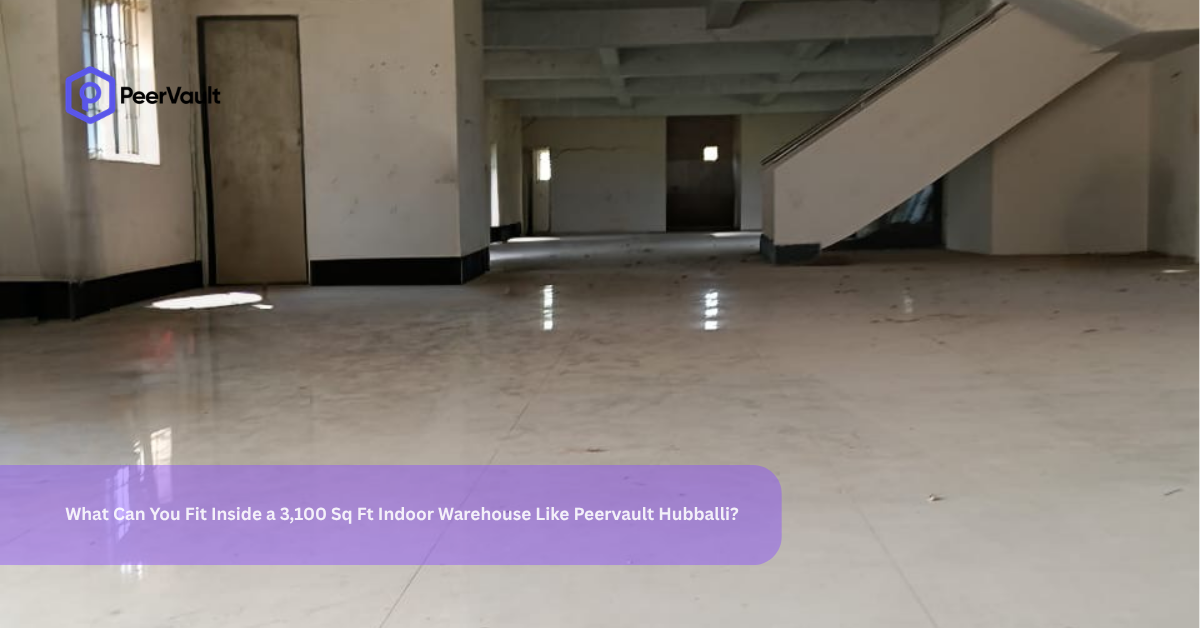
What Can You Fit Inside a 3,100 Sq Ft Indoor Warehouse Like Peervault Hubballi?
TL;DR :
A 50’x62′ (3,100 sq ft) indoor warehouse in Hubballi, Karnataka rents for about ₹37,200/month (~₹12/sq ft) and can hold 300–400 pallets, 80–120 tonnes of goods, a small manufacturing line, or 10–14 vehicles making it a solid mid-size fit for e-commerce, wholesale, or fleet storage. Indoor space matters here because it protects stock from Hubballi’s heat, monsoon humidity, and dust. Compared to Bengaluru, Pune, and Hyderabad, Hubballi’s rates run noticeably cheaper per square foot, and larger warehouses generally cost less per sq ft than small self-storage units. Before renting, check ceiling height, access hours, dock width, and security features.
If you have ever typed “warehouse space near me” into Google while standing in a cluttered shop or a garage stacked to the ceiling with unsold stock, you already know the real question isn’t “how big is a warehouse” it’s “how much of my stuff will actually fit in it, and is it worth the rent.” A 3,100 sq ft indoor warehouse like the 50’x62′ unit available in Hubballi, Karnataka sits in a sweet spot: big enough to run a real business out of, small enough that you’re not paying for square footage you’ll never use.
This article breaks down exactly what fits into a space this size, who it’s built for, how it compares to other storage formats in Karnataka and nearby states, and how to think about the decision so you don’t overpay or under-buy on space.
First, Let’s Get the Dimensions Straight
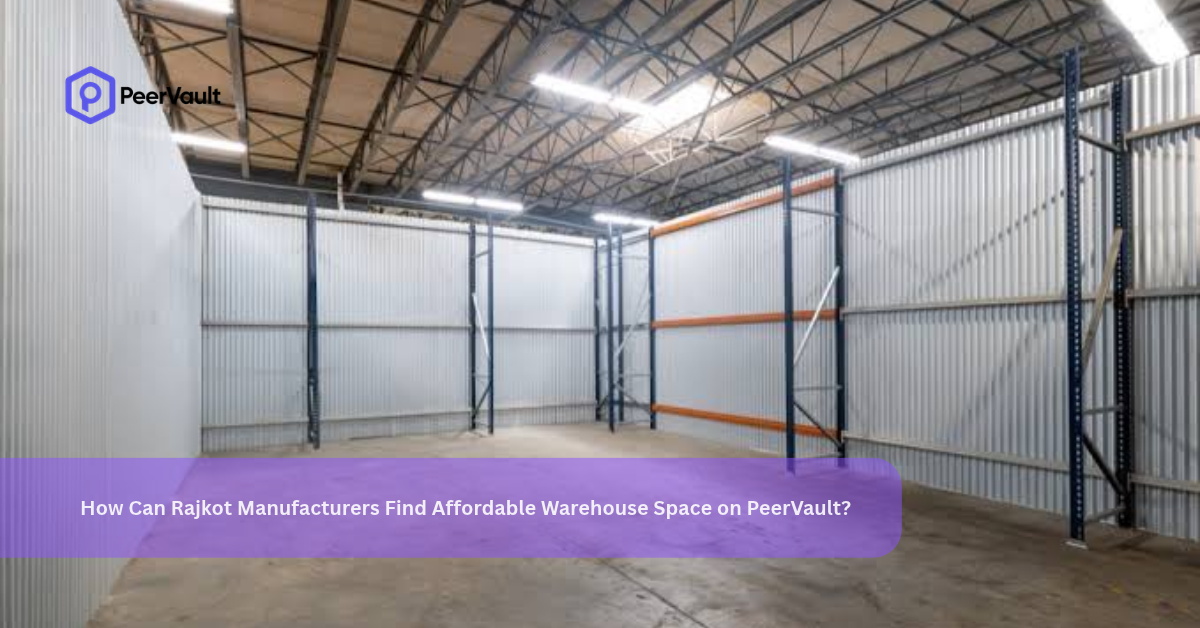
50 feet by 62 feet works out to 3,100 square feet of covered, indoor floor area. To put that in perspective :
- It’s roughly the footprint of five to six standard 3BHK apartments laid side by side.
- It’s large enough to park 10–12 small commercial vehicles (like Tata Ace or similar mini-trucks) with maneuvering room, or 4–5 medium trucks.
- With a typical clear height of 14–18 feet in most Hubballi indoor warehouses, you’re not just looking at floor area, you’re looking at usable cubic volume, which matters enormously once you start racking.
This particular listing sits in Hubballi, Karnataka, and rents for approximately ₹37,200 per month, which works out to roughly ₹12 per square foot, a figure we’ll come back to when comparing rates across cities.
What Actually Fits in 3,100 Sq Ft? A Practical Breakdown
Numbers on paper don’t mean much until you translate them into real business use cases. Here’s what a space this size typically accommodates.
1. E-commerce and D2C Inventory Storage
For an online seller or a direct-to-consumer brand, 3,100 sq ft is a serious upgrade from a spare room or a rented flat being used illegally as a stockroom. With standard pallet racking (roughly 3.5 ft x 4 ft footprint per bay, stacked 4–5 levels high), a space this size can comfortably hold :
- 300–400 pallet positions, depending on aisle width and racking configuration
- Enough room for a packing and dispatch zone (typically 400–600 sq ft) separate from bulk storage
- A small returns processing corner, which most growing D2C brands need but forget to plan for until they’re drowning in reverse logistics
If you’re doing 500–2,000 orders a month, this is often the exact size where a business stops “storing inventory at home” and starts “running a fulfillment operation.”
2. Wholesale and Distribution Stock
Traders and distributors think FMCG, hardware, electronics, textiles, or auto parts use warehouses like this as a regional stocking point. A 3,100 sq ft indoor unit typically supports :
- 80–120 tonnes of general dry goods, depending on stacking height and product density
- Segregated zones for fast-moving vs slow-moving SKUs
- A loading/unloading bay wide enough for a single truck at a time (important always confirm dock width and turning radius before signing)
3. Manufacturing and Light Assembly Units
Small manufacturing setups, packaging units, assembly lines, garment cutting and stitching operations, or light engineering work often need floor space more than height. A 50’x62′ shell gives you :
- Room for 2–3 production lines or workstations with walking aisles
- A raw material storage zone plus a separate finished goods zone
- Space for 1–2 small machines (like packaging sealers, compressors, or CNC-lite equipment) without needing a dedicated industrial shed
4. Vehicle and Fleet Storage
If you run a fleet of delivery vehicles, cabs, or two-wheelers for a rental business, a 3,100 sq ft indoor space can shelter :
- 10–14 two-wheelers with space for basic maintenance
- 6–8 small four-wheelers (hatchbacks) parked in an organized grid
- 4–5 mini-trucks or tempo-sized vehicles, protected from Hubballi’s sun and monsoon rains a real consideration given the region’s weather swings between April and September
5. Seasonal and Bulk Household/Business Overflow Storage
Businesses that deal with seasonal spikes, festival goods, agricultural inputs, construction material, or event equipment often need short-term bulk space rather than a permanent facility. A unit this size can hold :
- Festival and event inventory (decor, lighting rigs, tents, furniture) for rental businesses
- Bulk raw agricultural produce in sacks or crates, common in Hubballi given its role as a trading hub for the region’s agri-belt
- Overflow inventory during Diwali, wedding season, or year-end stock clearance when your regular space simply isn’t enough
Why Indoor Matters (Not Just Square Footage)
A lot of people searching for warehouse space focus purely on area and skip past the word “indoor.” That’s a mistake. Indoor warehousing in Hubballi specifically protects against :
- Heat damage Hubballi summers regularly cross 35°C, which can degrade packaging, adhesives, electronics, and certain food-grade or pharma-adjacent goods stored in open or semi-covered sheds.
- Monsoon moisture North Karnataka’s monsoon (June–September) brings humidity that warps cardboard, corrodes metal parts, and encourages mold in textiles and paper goods.
- Dust infiltration Hubballi is a growing industrial and trading city with significant road and construction dust; an open yard exposes inventory to grime that indoor units simply don’t.
- Security Indoor, enclosed warehouses with locked access and controlled entry reduce theft risk far more effectively than open lots, which matters if you’re storing high-value electronics, branded goods, or documents.
This particular Hubballi listing includes a private entrance, a locked area, and 24/7 daily access three features that, together, tell you the space is designed for businesses that need to move stock in and out on their own schedule, not just during “office hours.”
How Much Does Warehouse and Storage Space Cost Across India? A Rate Comparison
One of the most common questions after “what fits” is “am I paying a fair rate.” Storage pricing in India varies enormously by city, format, and whether the space is indoor, outdoor, or climate-controlled. Here’s a broad comparison to give you context, based on typical listing rates for similar indoor/outdoor storage formats :
Location | Space Type & Size | Approx. Monthly Rate | Approx. Rate per Sq Ft |
Hubballi, Karnataka | 50'x62' Indoor Warehouse (3,100 sq ft) | ₹37,200 | ~₹12 |
Hubballi, Karnataka | 82'x100' Indoor Warehouse (8,200 sq ft) | ₹82,000 | ~₹10 |
Bengaluru, Karnataka | 20'x30' Self Storage (600 sq ft) | ₹10,000 | ~₹16.7 |
Bengaluru, Karnataka | 31'x26'x12' Self Storage (~806 sq ft) | ₹12,000 | ~₹14.9 |
Bengaluru, Karnataka | 20'x12'x11' Self Storage (240 sq ft) | ₹20,000 | ~₹83 (premium/short-term format) |
Bengaluru, Karnataka | 8'x7' Car Parking (56 sq ft) | ₹3,000 | ~₹53.6 |
Bengaluru, Karnataka | 12'x20' Car Parking (240 sq ft) | ₹2,400 | ~₹10 |
Pune, Maharashtra | 10'x15' Car Parking (150 sq ft) | ₹5,500 | ~₹36.7 |
Hyderabad, Telangana | 10'x15'x10.5' Self Storage (150 sq ft) | ₹1,900 | ~₹12.7 |
(Rates as listed for comparable spaces; actual pricing varies by exact location, host, duration, and demand always confirm current rates directly on the listing before budgeting.)
What This Table Tells You
A few patterns emerge that are useful if you’re deciding between formats :
1. Bulk warehouse space is cheaper per square foot than small-format self-storage. Notice how the larger 8,200 sq ft Hubballi warehouse comes in at roughly ₹10/sq ft, while small self-storage units in Bengaluru can run ₹15–80+ per sq ft. This is standard across the storage industry; bigger footprints almost always mean lower per-unit cost, because fixed costs (security, access infrastructure, staffing) get spread across more area.
2. Tier-2 cities like Hubballi offer meaningfully lower rates than Bengaluru. For businesses that don’t need to be physically inside Bengaluru city limits distributors, regional stockists, e-commerce sellers shipping pan-India Hubballi’s warehouse rates are a fraction of what comparable indoor space costs in Bengaluru or Pune, without sacrificing connectivity, since Hubballi sits on major national highway and rail corridors connecting North Karnataka to Maharashtra, Goa, and coastal Karnataka.
3. Car parking rates vary wildly by city and format. Compare Pune’s ₹36.7/sq ft for a small parking spot to Bengaluru’s ₹10/sq ft for a larger one this usually comes down to hyper-local demand (proximity to residential density, commercial zones, or areas with parking scarcity) rather than any consistent national rate.
4. Self-storage is priced for convenience, not bulk economics. If you’re storing a handful of boxes or personal items short-term, small self-storage units make sense despite the higher per-sq-ft rate, because you’re not paying for thousands of unused square feet. But the moment your storage need crosses into “pallets of inventory” or “vehicle fleet” territory, a full warehouse becomes the economically sound choice.
Is 3,100 Sq Ft the Right Size for You?
Before locking in a space this size, run through this quick self-check :
- Do you currently store goods across multiple smaller locations (a room at home, a rented garage, a friend’s shop corner)? If yes, consolidating into one 3,100 sq ft unit often costs less overall and dramatically improves inventory visibility.
- Are you planning to add racking or shelving? If so, remember that usable capacity depends on height as much as floor area. Always ask about clear ceiling height before assuming your storage volume.
- Do you need daily or 24/7 access? Not all warehouse listings offer this. Confirm access hours and frequency (daily vs appointment-only) before committing, especially if your business runs early morning dispatches or late-evening restocking.
- Is your stock sensitive to heat, humidity, or dust? If yes, indoor is non-negotiable don’t be tempted by cheaper open-yard rates if it means damaged goods later.
- How long do you need the space for? Warehouse listings are often available on flexible terms weekly, biweekly, or monthly so short-term overflow needs (like a festival season stock surge) don’t require a full year’s commitment.
Final Thoughts
A 50’x62′, 3,100 sq ft indoor warehouse in Hubballi isn’t just a number on a listing page it’s a working-sized space capable of holding hundreds of pallets, a small fleet of vehicles, a light manufacturing line, or a full-scale wholesale distribution operation, all while keeping your goods protected from Hubballi’s heat, dust, and monsoon humidity. At an approximate rate of ₹12 per square foot, it also sits at a genuinely competitive price point compared to similar spaces in Bengaluru, Pune, or Hyderabad especially once you account for the lower per-square-foot cost that comes with larger indoor formats.
If your business has outgrown makeshift storage but doesn’t yet need a sprawling industrial shed, a space in this size range is often the most cost-efficient middle ground enough room to grow into, without paying for space you won’t touch for another two years.
Before finalizing any warehouse or storage rental, always verify current rates, exact dimensions, access terms, and security features directly with the listing, since pricing and availability can shift with demand and season.
Frequently Asked Questions
1. How many square feet is a 50’x62′ warehouse?
A 50’x62′ warehouse works out to 3,100 square feet of indoor floor area (50 multiplied by 62).
2. Is a 3,100 sq ft warehouse big enough for a small business?
Yes. It’s a practical mid-size option for e-commerce fulfillment, wholesale distribution, light manufacturing, or fleet parking large enough to run real operations, but not so large that you’re paying for unused space.
3. What is the monthly rent for a 50’x62′ indoor warehouse in Hubballi?
This particular listing is priced at approximately ₹37,200 per month, which works out to roughly ₹12 per square foot.
4. Is indoor warehouse space better than open-yard storage?
For most goods, yes. Indoor storage protects against heat, monsoon moisture, dust, and theft, all real concerns in Hubballi given its seasonal weather swings and growing industrial activity.
5. How many pallets can fit in a 3,100 sq ft warehouse?
With standard racking, a space this size can typically hold 300–400 pallet positions, depending on aisle width, racking height, and how much floor area is reserved for packing or dispatch zones.
6. Can this size warehouse be used for vehicle storage?
Yes. It can comfortably shelter around 10–14 two-wheelers, 6–8 hatchbacks, or 4–5 mini-trucks, depending on how the space is laid out.
7. What access hours does this warehouse offer?
This listing offers 24/7 daily access with a private entrance and locked area, which is useful for businesses that need to move stock outside standard working hours.
8. How does Hubballi’s warehouse pricing compare to Bengaluru?
Hubballi generally offers lower per-square-foot rates than Bengaluru for comparable indoor space, making it an attractive option for regional distributors and businesses that don’t need a Bengaluru city address.
9. Can I rent this warehouse for a short period instead of a full year?
Storage listings like this are often available on flexible terms weekly, biweekly, or monthly which suits seasonal or short-term overflow needs without locking into a long lease.
10. What kind of businesses typically use a space this size?
E-commerce sellers, wholesale traders, light manufacturers, fleet operators, and businesses needing seasonal bulk storage (festival goods, agricultural produce, event equipment) are the most common users of a 3,000+ sq ft indoor warehouse.
11. Does warehouse size affect the per-square-foot rental rate?
Yes. Larger warehouses generally come with a lower per-square-foot cost than smaller self-storage units, since fixed costs like security and access infrastructure are spread across more areas.
12. What should I check before renting an indoor warehouse?
Confirm the clear ceiling height (for racking capacity), access hours and frequency, loading/unloading dock width, security features, and current rental rate directly with the listing before committing.
About the Author
Name : Santosh Avarolli Connect with him on LinkedIn.
Contact us now to check availability and reserve this 3,100 sq ft indoor warehouse in Hubballi.
Popular Posts