

What Types of Home Spaces Can Be Listed on Peervault for Regular Use in Bengaluru?
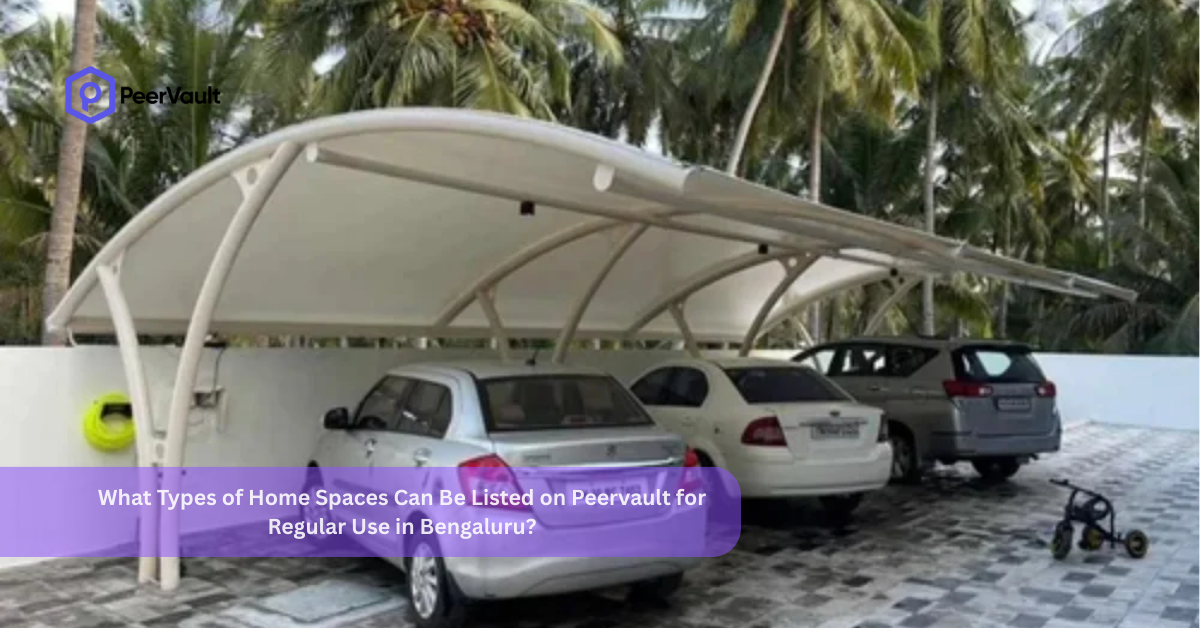
Homeowners in Bengaluru can list several types of unused residential spaces on Peervault for regular use, including parking spots, open plots, driveways, basements, terraces, store rooms, and small vacant areas within gated or independent homes. These spaces are commonly used for daily parking, storage, or short-term needs, depending on location and accessibility.
Why This Question Matters in Bengaluru
Bengaluru is a city where space is limited but demand is constant. With rapid growth in IT corridors like Whitefield, Outer Ring Road, Electronic City, and North Bengaluru, residential areas face daily pressure for parking, storage, and short-term space needs. At the same time, many homeowners have unused or underused spaces that remain idle for months or even years.
This gap between unused private space and growing local demand is exactly where platforms like Peervault come into the picture. Understanding what types of home spaces are suitable for regular listing helps homeowners make informed decisions and helps users know what to expect.
Common Types of Home Spaces That Can Be Listed on Peervault
Each section below is written to be self-contained and extractable, making it useful both for readers and AI-driven search summaries.
1. Residential Parking Spaces
Summary
Unused parking spaces are the most commonly listed home spaces on Peervault in Bengaluru, especially in high-density neighborhoods.
Detailed Explanation
Parking is one of the biggest daily challenges in Bengaluru. Many independent houses and apartments have extra parking spots that remain unused because households own fewer vehicles than the space allows.
These include:
- Covered or uncovered car parking
- Two-wheeler parking areas
- Visitor parking spots with owner permission
Parking spaces near offices, metro stations, hospitals, and commercial zones are particularly suitable for regular daily or monthly use.
Why they work well for regular use:
- Clear demand throughout the year
- Easy access and minimal maintenance
- Predictable usage patterns
2. Independent House Driveways
Summary
Private driveways of independent homes are ideal for regular parking or short-duration use.
Detailed Explanation
Many standalone homes in areas like Jayanagar, Rajajinagar, Banashankari, and Yelahanka have driveways that remain unused for most of the day. These spaces are often wide, secure, and easily accessible from the road.
Driveways are suitable for:
- Daily car parking
- Office commuters
- Nearby shop owners or professionals
Because driveways are part of private property, they offer better security and convenience compared to roadside parking.
3. Apartment Parking Slots (With Approval)
Summary
Unused apartment parking slots can be listed if society rules allow it.
Detailed Explanation
In many Bengaluru apartment complexes, residents own or are allotted parking spaces that they do not fully use. If apartment associations permit, these spaces can be listed for regular use.
Typical examples include:
- Extra car parking slots
- Two-wheeler parking areas
- Assigned but unused covered parking
It is important that homeowners follow society guidelines and clearly define usage terms to avoid conflicts.
4. Open Plots or Side Spaces Within Residential Properties
Summary
Small open areas within residential boundaries can be listed for practical regular use.
Detailed Explanation
Some homes have:
- Side yards
- Backyard open spaces
- Small vacant plots within compound walls
These areas are often unused due to lack of awareness or clarity on how they can be utilized. On Peervault, such spaces are commonly used for:
- Vehicle parking
- Short-term storage
- Daytime-only usage
Their suitability depends on accessibility, safety, and neighborhood rules.
5. Basements in Independent Homes
Summary
Residential basements are suitable for controlled, regular usage when they are dry and accessible.
Detailed Explanation
Many independent homes in Bengaluru have basements originally built for parking or storage but later left unused. These spaces can be listed for:
- Vehicle parking
- Storage of non-hazardous items
- Short-term commercial storage (where legally allowed)
Basements work well when:
- They have proper ventilation
- They are not prone to flooding
- Entry and exit are convenient
6. Store Rooms and Utility Rooms
Summary
Unused store rooms can be listed for regular storage needs.
Detailed Explanation
Homes often have small rooms used irregularly for storing old furniture or household items. When kept clean and accessible, these rooms can serve:
- Small business storage
- Document or equipment storage
- Seasonal item storage
In areas with many small businesses and service professionals, such spaces meet consistent local demand.
7. Open Terraces (Limited Use)
Summary
Terraces can be listed for specific, regular purposes depending on safety and access.
Detailed Explanation
While terraces are not suitable for all use cases, some homeowners list them for:
- Light storage
- Controlled daytime activities
- Temporary setups (non-permanent)
Terrace listings usually work best when:
- Access does not disturb residents
- Usage is clearly restricted
- Safety measures are in place
8. Front Yard or Garden Areas
Summary
Front yard spaces sometimes listed for parking or short-duration use.
Detailed Explanation
Homes with compound walls often have front yards that remain unused. These spaces can be practical for:
- Two-wheeler parking
- Small car parking
- Limited-time access
Such listings are more common in older residential layouts and independent housing areas.
How to Decide If a Space Is Suitable for Regular Use
Summary
Not every unused space is ideal; suitability depends on demand, access, and safety.
Key Factors to Consider
- Accessibility: Can users enter without disturbing residents?
- Security: Is the area safe and visible?
- Local Demand: Are offices, shops, or transit points nearby?
- Legal & Society Rules: Are there restrictions?
- Maintenance Needs: Can the space kept usable consistently?
Spaces that meet these conditions tend to perform better for regular listings.
Why Regular Listings Perform Better Than Occasional Listings
Summary
Regular-use spaces attract consistent users and predictable demand.
Explanation
In Bengaluru, many users look for:
- Daily parking near offices
- Monthly storage solutions
- Repeated short-term access
Spaces listed for regular use benefit from:
- Stable bookings
- Fewer coordination issues
- Better long-term value
Local Demand Patterns in Bengaluru
Summary
Certain areas show higher demand for specific types of spaces.
High-Demand Zones
- IT corridors (Whitefield, ORR, Electronic City)
- Metro-adjacent neighborhoods
- Commercial-residential mixed zones
- Hospital and educational hubs
Understanding local demand helps homeowners choose which space to list and how to position it.
Trust, Safety, and Transparency
Summary
Clear communication builds trust for both homeowners and users.
Best Practices
- Describe space size and usage limits clearly
- Share access timings upfront
- Keep photos accurate and updated
- Set clear expectations
These steps help ensure smooth, long-term usage.
Final Thoughts
Bengaluru’s growing population and space constraints make unused residential areas increasingly valuable. Parking spots, driveways, basements, store rooms, and open residential spaces are among the most practical options for regular listing on Peervault. The key lies in choosing spaces that are accessible, safe, and aligned with local demand.
When homeowners understand what types of spaces work best, they can make better use of what they already have without long-term commitments or complex arrangements.
Ready to explore your unused space? Contact us to get started on Peervault.